Posts

Showing posts with the label biology

Citizen Science Kids Can Do at Home

Today marks the 55th day since schools closed in California. Although state and local governments are working to put a reopening plan into action, schools are going to remain closed for the rest of this 2019-2020 school year, and summer programs are likely going to have difficulty reopening too. So what are kids to do? We have all these children with sharp eyes and brilliant minds, and not much to use them on apart from video games. Enter Citizen Science! As citizen scientists, kids can use their mental energy (and Internet bandwidth) to work toward furthering a good cause like studying wildlife in remote regions of the globe, tracking climate change, learning about distant galaxies, or discovering underlying causes of diseases to move researchers closer to finding treatments.  So today I gave a webinar highlighting my personal favorite citizen science projects for kids to try. There are thousands of projects out there, and I must have played at least a few dozen of them be...
Building a Balanced Dinosaur

Image
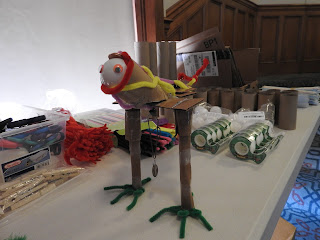
On Thursday, August 25th, while the rest of the library was closed early, kids and their parents were hanging out here in the children's Story Room learning about paleontology and center of gravity, and building their own dinosaurs! I showed a slide show about how scientists' concepts of dinosaurs has changed over the years, particularly when we think about how a dinosaur would have stood or walked. Based on scientists' knowledge of anatomy and the weight of dinosaur bones, they've come to the conclusion that most dinosaurs had tails that stuck straight out, and provided balance while holding their heads and upper bodies in a forward (not upright!) position. Curiosity Machine: Build a Balanced Dinosaur from AnnMarie Ppl Then we took a wide variety of materials, including toilet paper tubes, cardboard, tape, plastic straws, pipe cleaners, and a few colorful and fun materials like feathers and googly eyes, and made dinosaurs that stood at least 6" ta...

Octopus Chromatophores

Image
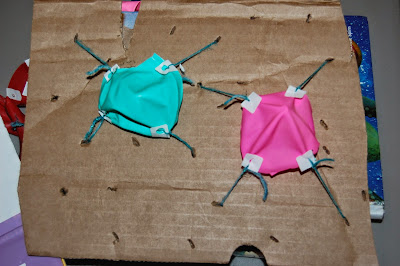
Today we learned about color changing animals and how they're able to expand or contract special pigment sacs called chromatophores in their skin, in order to give the overall visual effect of having changed color. In reality, they have just chosen which pigments to expand and which ones to shrink, but all the pigments are there! We talked about how octopuses do this and how they also have papillae in their skin that can change the texture of their skin from smooth to rough or bumpy, which gives them an added camouflage benefit. To demonstrate how this works, I programmed a simulation of chromatophores expanding and contracting to match their environment using Scratch. You just click on the words Brown, Red, or Yellow to make the background change, and watch as the chromatophores change by expanding or contracting to emphasize that color! Click on the picture to go to the Scratch website and play with this simulation. Our hands on project today was pretty easy--to build a ...